
call us today
337-436-6611
Lafayette Nursing Home Abuse Lawyer
Experienced Nursing Home Abuse Attorney in Lafayette
When families need help caring for their loved ones, they may rely on nursing homes for assistance with daily tasks and medical needs such as medication. Residents may suffer abuse before their families realize how serious the problem has become. If your loved one resides near Lafayette General Medical Center or Ambassador Caffery Parkway and you suspect mistreatment, contact a Lafayette nursing home abuse lawyer at Cox Law Firm.
We can help families investigate allegations of nursing home abuse and hold facilities accountable for their actions.
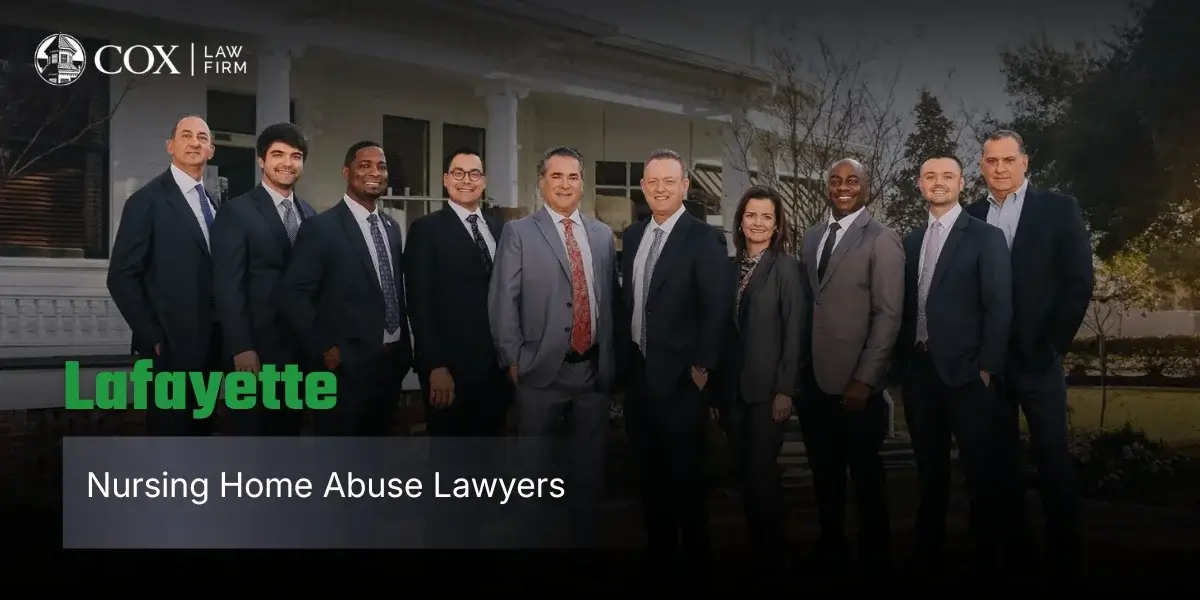
A History of Protecting Louisianans
Our attorneys have been helping injured Louisianans since 1969. Brothers James and William Cox founded Cox Law Firm to represent victims and hold negligent parties accountable. We have supported some of the largest settlements in the state’s history, including a landmark $262 million verdict on behalf of more than 15,000 healthcare providers. Our attorneys have over 135 years of combined experience in personal injury law.
Types of Nursing Home Abuse
Nursing home abuse comes in many forms. In some cases, residents are purposefully hurt by caregivers. In other situations, residents may be deprived of care when they need help moving, using the restroom, or receiving medical treatment. Types of nursing home abuse include:
- Physical abuse like hitting, pushing, shaking, rough handling, or improperly restraining residents
- Emotional abuse, including threats, humiliation, intimidation, and ostracizing residents
- Sexual abuse or contact
- Financial exploitation, including unauthorized bank account withdrawals, stealing valuables, and forcing residents to sign financial documents
- Neglect or failure to provide adequate food, hygiene, medical care, or supervision
Elderly adults with dementia, physical disabilities, or speech difficulties may struggle to report abuse. Family members should be aware of injuries that cannot be explained and drastic changes in behavior.
The Presence of Nursing Home Abuse
The abuse of elderly adults in nursing homes is not isolated. Multiple studies show that caretakers abuse a surprising number of residents. According to the World Health Organization (WHO), 64.2% of institutional care staff surveyed across the studies reported committing some form of elder abuse during the previous year.
Surveyed staff admitted to abuse during the past year. The WHO’s worldwide figure accounts for numerous forms of mistreatment and isn’t limited to Lafayette nursing homes.
The Centers for Medicare & Medicaid Services (CMS) estimates that about 1.2 million residents lived in nursing homes certified by Medicare and Medicaid.
The Signs of Nursing Home Abuse
There are many signs of nursing home abuse. While each sign does not automatically prove abuse, they can provide supporting evidence of the sort. Signs of nursing home abuse include:
- Unexplained bruises
- Dehydration
- Bedsores
- Broken bones
- Weight loss
- Behavioral changes
Certain conditions can cause similar symptoms. Families should ask questions if they notice alarming changes, review their loved one’s medical records, and consult with independent medical professionals.
Reporting Nursing Home Abuse
If you suspect nursing home abuse, make sure the resident is safe from immediate harm. Families can take photographs of injuries, note dates of incidents, and keep records of conversations with the administration. Medical records, care plans, and photographs can serve as evidence if your loved one was abused.
The abuse can be reported to the Louisiana Department of Health and the Louisiana Long-Term Care Ombudsman Program. You should also seek emergency help if your loved one is in immediate danger.
Hire a Nursing Home Abuse Lawyer
You should hire a nursing home abuse lawyer if a facility denies wrongdoing, gives different accounts of events, or refuses to provide information related to the case. A Lafayette nursing home abuse attorney can acquire staff schedules, see medication logs, go over inspection reports, and speak with medical professionals about whether the right steps were taken to provide care.
Your attorney can also inform you of nursing home abuse laws and determine who may be liable, assess documented damages, and seek financial recovery through negotiations or legal action. This could be essential if a facility blames preventable injuries on your loved one’s age or preexisting conditions. A lawyer can hold the responsible parties accountable, allowing them to be subject to nursing home abuse penalties.
FAQs
Can I File a Nursing Home Abuse Claim If My Loved One Has Dementia?
Yes, you can file a nursing home abuse claim if your loved one has dementia. While dementia may make investigation more difficult because the resident may not remember or explain what happened, having dementia does not eliminate a nursing home resident’s legal rights against abuse and neglect.
Medical records, along with behavioral observations and input from those close to the resident, can help piece together the events and assess if the facility offered adequate care.
What Happens If a Nursing Home Resident Dies Because of Suspected Abuse?
If a nursing home resident dies because of suspected abuse, their surviving family members might be able to take legal action. Medical records, autopsy reports, and testimony from medical staff may help establish whether improper care caused or hastened death. Depending on the facts of the situation and the relationship between the deceased resident and the surviving family members, there may be wrongful death or survival claims available.
Who Can File a Nursing Home Abuse Claim If the Resident Cannot Make Legal Decisions?
Who can file a nursing home abuse claim if the resident cannot make legal decisions depends on the resident’s situation and the type of claim being filed. A legal representative with authority to act on behalf of the resident may be able to pursue a claim. This includes a person with applicable power of attorney authority or a court-appointed representative.
Family members do not automatically have legal authority to act for another person simply by virtue of their relationship.
Can a Nursing Home Be Responsible for Abuse Committed by Another Resident?
A nursing home may be able to be responsible for abuse committed by another resident in Lafayette. Nursing homes have duties related to resident safety, including harm caused by other residents. If nursing home administrators were aware of a resident’s repeated aggressive behavior and failed to take reasonable precautions to reduce the foreseeable risk, the nursing home’s response to prior incidents could be relevant to a negligence claim.
Cox Law Firm Can Help
If your loved one suffered nursing home abuse, legal assistance is available to you. Contact Cox Law Firm today for a free consultation.
Request Your
Free Consultation
Fields Marked With An “ * ” Are Required

Cox Law Firm represents individuals injured through the negligence of others in the southwestern Louisiana communities of Lake Charles, Sulphur, Cameron, Jennings, Oberlin, DeRidder, Leesville, Crowley, Oakdale, Eunice, Lake Arthur, Abbeville, DeQuincy and Vinton, and other communities in these parishes: Calcasieu Parish, Jefferson Davis Parish, Vernon Parish, Beauregard Parish, Cameron Parish, Allen Parish, Vermilion Parish, Evangeline Parish, Acadia Parish, Terrebonne Parish and St. Mary Parish.
Office Location
723 Broad Street
Lake Charles, LA 70601
© Copyright 2026 Cox Law Firm. All rights reserved.
Digital Marketing By 
*Images are obtained under license from Canva and other third-party stock image providers, with attribution included where required.